Wheel alignment and tire balance are often confused. It makes sense. Both can cause vibration, uneven tire wear, steering complaints, and that general feeling that the car does not drive quite right.
Still, they are not the same service. Alignment deals with the angle of the wheels and how the tires meet the road. Tire balance deals with how evenly the tire and wheel spin. When those problems get mixed up, drivers can spend money on the wrong fix and still have the same shake, pull, or tire wear afterward.
What Wheel Alignment Actually Means
Wheel alignment is the position of the wheels relative to the vehicle and the road. The main angles are camber, caster, and toe. Those angles affect steering, tire wear, and how straight the vehicle tracks.
If alignment is off, the tires may point slightly inward, outward, or lean in a way they should not. That can make the car pull, drift, wear tires unevenly, or leave the steering wheel sitting crooked. A vehicle does not have to be badly damaged to need alignment. Potholes, curbs, worn suspension parts, and normal driving can all move things out of spec over time.
What Tire Balance Actually Means
Tire balance is about the weight distribution around the tire and wheel assembly. Even a new tire and wheel can have small heavy and light spots. When the assembly spins at speed, those uneven spots can create vibration.
A tire balance service uses small weights to even out the assembly so it spins more cleanly. Balance problems usually show up as shaking at certain speeds, often through the steering wheel, seat, or floor. The vibration may be mild at lower speeds, then become obvious on the highway.
Why Alignment And Balance Feel Similar
Drivers mix up alignment and balance because both problems affect how the car feels on the road. A car with poor alignment can feel unstable or pull to one side. A car with an out-of-balance tire can shake and feel less comfortable at speed.
The difference is in the pattern. Alignment problems usually affect tracking and tire wear. Balance problems usually affect vibration. Of course, real vehicles do not always follow the textbook. A tire with uneven wear from bad alignment can also become noisy or shaky. That is why a full inspection matters before choosing the repair.
Signs You May Need A Wheel Alignment
Alignment problems tend to show up in how the vehicle steers and how the tires wear. You might notice the car drifting left or right even when the road is flat. The steering wheel may sit off-center while driving straight.
Tires can also show clues. One edge may wear faster than the other. The tread may look feathered, chopped, or uneven across the surface. If the vehicle recently hit a pothole, curb, or road debris, alignment should be checked, especially if the steering feels different afterward.
Signs You May Need Tire Balancing
Balance problems are usually felt as vibration. The steering wheel may shake at 55 mph, then calm down at a different speed. The seat or floor may vibrate if the issue is in the rear tires. Sometimes the shake is most noticeable on fresh pavement because there is less road noise to hide it.
A missing wheel weight, uneven tire wear, bent wheel, tire repair, or newly installed tires can all lead to balance concerns. If the vehicle drives straight but shakes at speed, tire balance should be near the top of the list.
Worn Parts Can Complicate The Answer
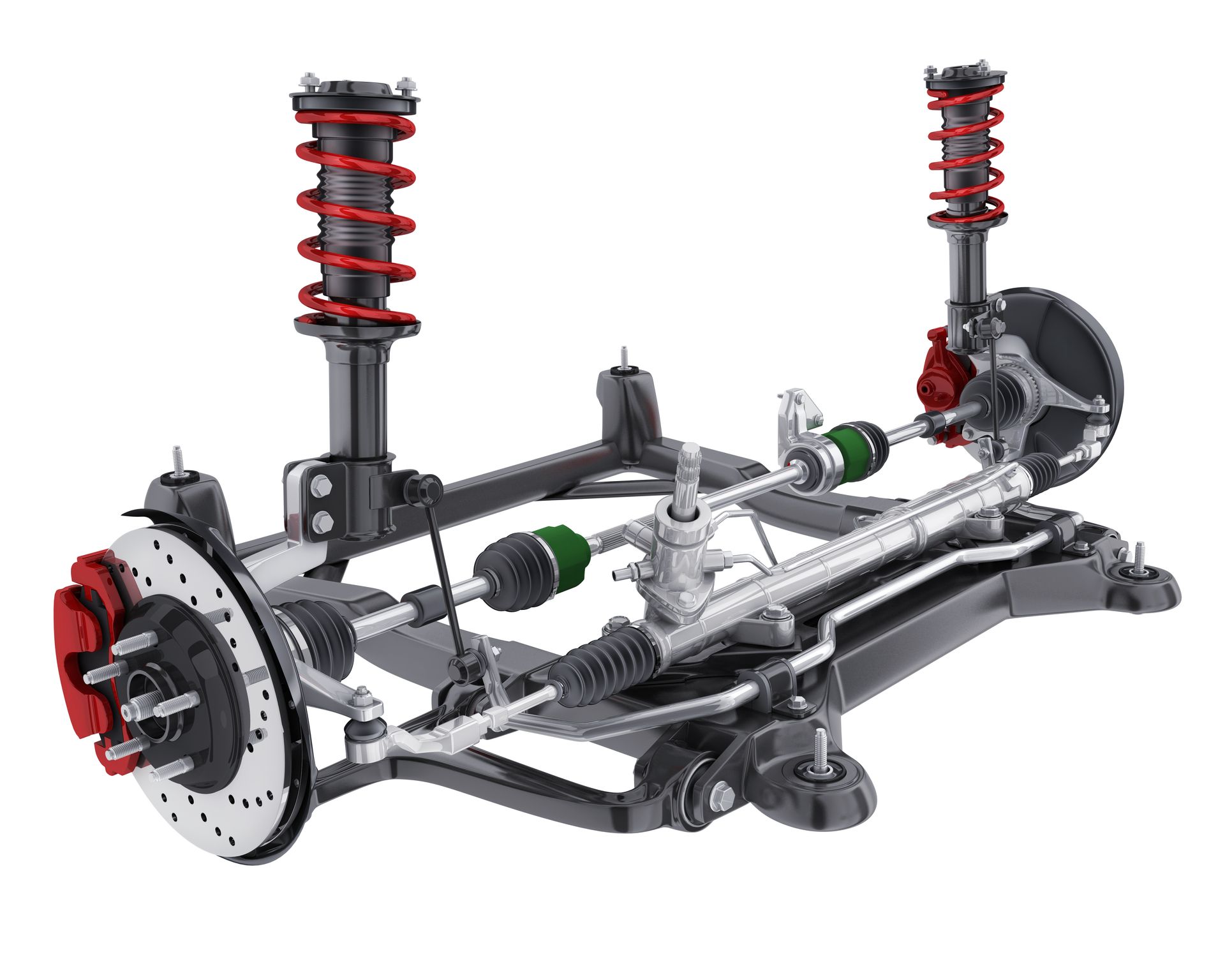
Alignment and balance are not always the only possibilities. Worn shocks, struts, tie rods, ball joints, control arm bushings, wheel bearings, or damaged wheels can create symptoms that feel like tire or alignment trouble.
That is why a shop should look at the whole front end and tire condition before making the call. Balancing a tire will not fix a loose tie rod. Aligning a car will not solve a separated tire belt. Regular maintenance helps catch these related problems before they ruin tires or make the vehicle harder to control.
Why Tires Should Be Checked First
Tires tell a lot about what the vehicle has been doing. Tread depth, pressure, age, sidewall condition, uneven wear, cupping, and puncture repairs all give clues. If the tires are worn unevenly, the shop needs to figure out whether alignment, suspension, inflation, or rotation habits caused it.
Sometimes the right answer is more than one service. A vehicle may need a worn suspension part replaced, then an alignment, and then tire balancing after new tires are installed. The order matters. Fixing the root cause first keeps the same tire problem from coming back.
Get Wheel Alignment And Tire Balance In Shawnee, KS, With F & M Automotive Body & Repair
If your car pulls, shakes, wears tires unevenly, or feels off at highway speeds, F & M Automotive Body & Repair in Shawnee, KS, can check the tires, wheels, steering, suspension, alignment, and balance to find the real cause.